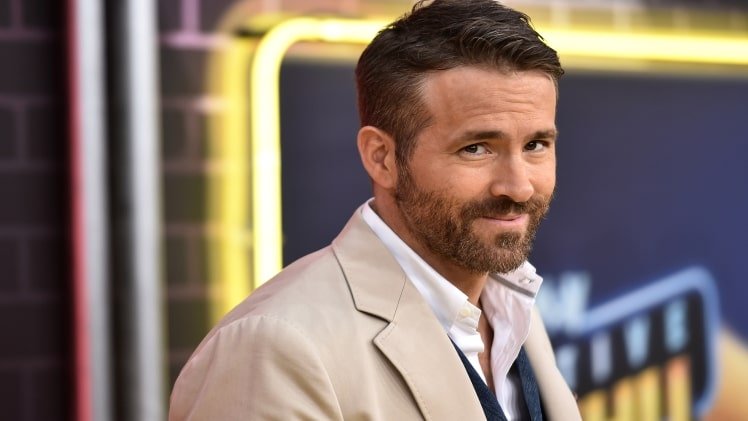
The superhero landscape shifted irrevocably the moment Ryan Reynolds donned the red and black suit, declaring, "Maximum Effort." This wasn't just another comic book adaptation; it was a meta, irreverent, and utterly unique experience that became known as The Deadpool Effect: Ryan Reynolds' Roles and Character Representation. The character, a motormouthed mercenary named Wade Wilson, is renowned for his regenerating abilities, dark humor, and a startling habit of breaking the fourth wall—traits Reynolds embodies with unparalleled brilliance. But this isn't a story of overnight success; it’s the culmination of decades honing a very specific set of skills, an apprenticeship in chaos that perfectly prepared him for the Merc with a Mouth.
What makes Deadpool such a phenomenon, and why does Ryan Reynolds seem so intrinsically linked to his success? It's a fascinating blend of serendipitous casting, a deep understanding of comedic timing, and a career path that, in hindsight, looks like a direct pipeline to the irreverent anti-hero.
At a Glance: Understanding The Deadpool Effect
- Genre Revolution: Deadpool redefined superhero films, proving R-rated, meta-humor could be incredibly lucrative.
- Reynolds' Intrinsic Fit: His comedic timing, action prowess, and charmingly chaotic persona made him the ideal Wade Wilson.
- Career-Long Preparation: Reynolds’ seemingly disparate past roles—from college party king to sarcastic comic relief—were actually foundational.
- Beyond the Screen: His off-screen wit and social media savvy amplify the character’s meta appeal, blurring the lines between actor and role.
- Commercial Juggernaut: The films grossed over $1.5 billion worldwide, demonstrating massive audience appetite for this unique take.
- Cultural Touchstone: Deadpool inspired memes, merchandise, and a distinct comedic voice that continues to influence pop culture.
What Is The Deadpool Effect? Defining the Genre-Bending Phenomenon
At its core, "The Deadpool Effect" describes the seismic shift in the superhero genre catalyzed by the Deadpool films, largely due to Ryan Reynolds' singular portrayal. It’s more than just a successful movie franchise; it's a blueprint for blending high-octane action with self-aware comedy, an R-rated sensibility, and a protagonist who routinely shatters the fourth wall. Before Deadpool, many studios shied away from mature-rated superhero films, fearing limited audience reach. Reynolds, along with director Tim Miller and writers Rhett Reese and Paul Wernick, proved them spectacularly wrong.
The films' commercial success is undeniable. The 2016 original became the highest-grossing R-rated film ever at the time, and Deadpool 2 (2018) shattered records for an R-rated opening weekend. This wasn't just about gratuitous violence or foul language; it was about intelligent satire, exploring themes of identity, belonging, and mental health through a delightfully twisted lens. The marketing campaigns, spearheaded by Reynolds himself, embraced social media with a savvy, self-deprecating humor that felt like an extension of the character, not just an advertisement. This integrated approach, where the actor, character, and promotional material often seemed indistinguishable, is a hallmark of the Deadpool Effect.
The Apprenticeship of Wade Wilson: Ryan Reynolds' Formative Roles
To truly appreciate Reynolds' Deadpool, you have to look back at the roles that, perhaps unknowingly, served as his training ground. Many actors find a career-defining role, but for Reynolds, Deadpool feels like the natural evolution of almost every significant character he’d played prior. He wasn't just cast; he was built for it.
The Chaotic Motormouth: From "Berg" to Wade's Wisecracks
Long before Wade Wilson was quipping about his disfigured face, Ryan Reynolds was refining his fast-talking, charmingly immature persona. His breakout role as Michael "Berg" Bergen in the late 1990s sitcom Two Guys and a Girl was foundational. Berg was a chaotic motormouth, often immature but undeniably endearing, whose quick wit and slightly off-kilter perspective foreshadowed Deadpool's rapid-fire banter. This role also cemented his ability to anchor a comedic ensemble, a skill crucial for Deadpool's interactions with Negasonic Teenage Warhead, Colossus, and Cable. It was also during this period he forged a friendship with Nathan Fillion, who would later cameo as Headpool in the upcoming Deadpool & Wolverine, a testament to Reynolds’ long-standing connections in the industry.
Sarcasm and the Undead: A Glimpse into Deadpool's Morbid Humor
In the 2000 cult film Boltneck, Reynolds played Karl O'Reilly, a high school junior whose brain is swapped with that of a sarcastic, fast-talking criminal. While a quirky, obscure role, it offered an early demonstration of Reynolds handling a character who is literally not himself, infused with a dark, cynical wit that aligns perfectly with Deadpool's own gallows humor. The idea of a body housing a different, more chaotic personality is a fun, meta-mirror to Wade Wilson’s transformation.
The Raunchy Charmer: Unleashing Unfiltered Enthusiasm
If there's one role that put Reynolds on the map for his brand of irreverent, R-rated comedy, it's Van Wilder in National Lampoon's Van Wilder (early 2000s). As the titular character, Reynolds played a perpetually partying, charmingly enthusiastic college student with a penchant for raunchy humor and a "never say die" attitude. Van Wilder's unapologetic pursuit of fun, his playful breaking of social norms, and his ability to disarm with a smile (even when saying something outrageous) is pure Deadpool. This film was a masterclass in establishing Reynolds as a charismatic lead who could deliver shock value with a wink.
The Unexpected Comedic Delivery: "Soft and Chocolate Lips"
Even in a brief, uncredited cameo, Reynolds' comedic brilliance shone. His role as the Nurse in Harold and Kumar Go to White Castle (2004) was memorable for its immaculate comedic delivery and flirtatious dialogue, especially the line about "soft and chocolate lips." It showcased his ability to steal a scene with just a few lines, proving his knack for unexpected humor and charming absurdity—a trait Wade Wilson uses to both amuse and annoy.
The First Comic Book Foray: Action, Quips, and a Vampire Slayer
Reynolds' true pre-Deadpool comic book apprenticeship came with Hannibal King in Blade: Trinity (2004). This was his first major comic book role, and it's striking how much of Deadpool is present here. King is an action star capable of impressive feats, but more importantly, he's the relentless comic relief, peppering every fight scene and serious moment with sardonic wit and rapid-fire quips. He's cocky, charming, and a little bit annoying—all key ingredients for Wade Wilson. The parallels are so strong that Blade: Trinity feels like a proto-Deadpool performance, something recognized in the upcoming Deadpool & Wolverine with a meta cameo referencing Wesley Snipes' Blade.
The Broken Hearted Jerk: Fueling Deadpool's Rage
Not all of Deadpool's traits are purely comedic. Beneath the jokes lies a deeply wounded, sometimes furious individual. Reynolds explored this darker, angrier side as Chris Brander in Just Friends (2005). Brander, a brokenhearted jerk whose public rejection turned him into a smarmy, alienating personality, mirrors Wade Wilson’s profound rage and sense of betrayal after losing Vanessa and being disfigured. It’s the part of Reynolds’ repertoire that allows him to ground Deadpool's insanity with genuine pain, making the character far more complex than just a gag-machine.
Pushing the Boundaries of Crassness: Monty's Unfiltered Humor
In the ensemble comedy Waiting... (2005), Reynolds played Monty, a crass, often irritating server who constantly pushes the boundaries of acceptable humor. This role further refined his ability to portray characters who are unapologetically crude, often using humor as a defense mechanism or a way to assert dominance. Monty's unfiltered, sometimes offensive comedic style is a direct precursor to Deadpool's own no-holds-barred approach to jokes.
The Misguided Mentor: Deadpool's Questionable Advice
Finally, in Adventureland (2009), Reynolds took on the role of Mike, a misguided and somewhat pathetic mentor who offers terrible advice. This character element, though subtle, reflects Deadpool's own characteristic of being a flawed, often morally ambiguous guide, whether he's "mentoring" Negasonic Teenage Warhead or attempting to form the X-Force. It highlights Reynolds' capacity to play characters who are charmingly inept or intentionally unhelpful, adding another layer to Wade Wilson's complex persona.
Beyond the Script: Reynolds' Persona and Marketing Genius
What truly catapulted The Deadpool Effect into the stratosphere wasn't just Reynolds' on-screen performance, but his off-screen persona. He understood the character's voice intrinsically, often blurring the lines between Ryan Reynolds the actor and Wade Wilson the character. His relentless advocacy for the R-rated version of the film, his social media presence—rife with self-deprecating humor and clever meta-commentary—and his genuine passion for the source material made him an unofficial brand ambassador.
Reynolds leveraged his charm and wit to craft viral marketing campaigns that felt organic to Deadpool. From holiday-themed promos to direct addresses to fans, his marketing strategy bypassed traditional advertising by embracing the character's fourth-wall-breaking nature. This savvy approach, which often poked fun at superhero tropes and the very idea of movie marketing, created an unparalleled connection with the audience. Fans didn't just watch Deadpool; they engaged with him, often wondering about the actor's own personality traits, perhaps even speculating on topics like the Ryan Reynolds gay question in their curiosity about his often flamboyant on-screen portrayal.
The Cultural Phenomenon and Its Legacy
The Deadpool Effect isn't just about box office numbers; it's about cultural impact. The films satirize superhero tropes, from the brooding hero to the convoluted timelines, refreshing a genre that many felt was becoming stale. They proved that audiences craved authenticity, even if that authenticity was wrapped in sarcasm and gore.
Key moments in Reynolds' performance, like his iconic opening monologue in costume in the 2016 film, directly addressing the audience, or the "Maximum Effort" sequence in Deadpool 2 set to Celine Dion's “Ashes,” cemented his take on the character as legendary. Deadpool inspired memes, merchandise, and even a video game, becoming a relatable figure for those who appreciate humor in the face of adversity, or simply enjoy a character who doesn't take himself too seriously.
While critical reviews were occasionally mixed—some praising Reynolds and the humor while others criticized violence or perceived lack of depth—the films achieved a rare balance of critical acclaim and commercial success. They carved out a niche that allowed for more diverse storytelling within the superhero genre, emboldening other studios to explore R-rated content.
The Unmistakable Mark: Why Reynolds Is Deadpool
The journey from a fresh-faced sitcom actor to the world's most beloved mercenary is a fascinating study in character development—both on and off-screen. Ryan Reynolds didn't just play Deadpool; he became the embodiment of the character, drawing on a diverse array of past roles that, in retrospect, seem like essential building blocks. His natural comedic timing, his willingness to embrace irreverence, his surprising action star capabilities, and his deep understanding of meta-humor converged in a way few actors achieve with a single character.
Consider the blend: the chaotic motormouth of Berg, the sarcastic wit of Karl O'Reilly, the raunchy charm of Van Wilder, the scene-stealing delivery of the Nurse, the action-comedy balance of Hannibal King, the underlying rage of Chris Brander, the crass humor of Monty, and the misguided wisdom of Mike. Each element, honed over years, found its ultimate expression in Wade Wilson. This isn't just about an actor doing a good job; it's about an actor being so perfectly suited to a role that it defines his career and reshapes a genre.
Looking Ahead: The Enduring Power of The Deadpool Effect
The anticipation surrounding future installments is palpable. The release of the Deadpool & Wolverine trailer, featuring Hugh Jackman's Wolverine and Ryan Reynolds' Deadpool teaming up for a road trip filled with quips and violence, sent shockwaves through the fan community. This upcoming film isn't just another sequel; it's a testament to the enduring power of The Deadpool Effect and Reynolds' commitment to the character. It further solidifies Deadpool's place as a cornerstone of the modern superhero narrative, capable of existing within the broader Marvel Cinematic Universe while maintaining its unique, R-rated identity.
The success of Deadpool has paved the way for more diverse and riskier takes on comic book properties. It's a reminder that authenticity, passion, and a willingness to break conventions can lead to extraordinary results. Ryan Reynolds didn't just play a character; he created a phenomenon, forever changing how we perceive superheroes and the actors who portray them. The questions about an actor's personal life, whether it's Ryan Reynolds' personal life or any other public figure's, often stem from this deep connection audiences form with their portrayals.
The Lasting Blueprint: Applying Lessons from The Deadpool Effect
So, what can we take away from "The Deadpool Effect"? For creators, it's a powerful lesson in embracing unconventional narratives and trusting your unique voice. For actors, it highlights the value of building a diverse skill set and advocating fiercely for projects you believe in. And for audiences, it's a reminder that sometimes, the most unexpected heroes are the ones who break all the rules.
The "Deadpool Effect" isn't a fluke; it's a meticulously crafted phenomenon, decades in the making. It's Ryan Reynolds, every role, every quip, every charmingly chaotic moment, converging into one iconic, fourth-wall-shattering character. As the genre continues to evolve, the blueprint laid down by Deadpool and Reynolds will undoubtedly inspire countless future stories, proving that sometimes, being a little broken and a lot irreverent is exactly what the world needs. Fans, for example, continue to be intrigued by the multifaceted public persona of actors, often leading to curious searches about public figures, for instance, if Ryan Reynolds is gay. This persistent interest underscores the deep connection built through such impactful portrayals.